
.png)
Fields puzzles reward patience, observation, and a little trust in the logic. Every puzzle is designed to be solved step by step, no guessing required, but knowing what to look for can make the journey much smoother.
This guide series breaks Fields solving into three levels: Beginner, Intermediate, and Advanced. Each section introduces techniques you’ll naturally grow into as you solve more puzzles, from spotting obvious completions to applying subtle constraints that open up the grid. You don’t need to master everything at once, think of this as a toolbox you’ll return to whenever a puzzle slows you down.
Whether you’re just learning how Fields behave or refining your solving instincts, these guides are here to help you see the grid a little more clearly and enjoy the solve a little more along the way.
Beginner Tips
Every Fields puzzle is unique and knowing where to start can be intimidating. These beginner tips focus on the most reliable pieces of logic you’ll use again and again, like spotting a completed Fields, separating what can’t belong together, and noticing when a Field has no choice but to grow in a certain direction. Let’s dive in!
Completed Area
When a Field is complete surround it with cells in the opposite color. Otherwise the Field would grow larger than it’s supposed to be.
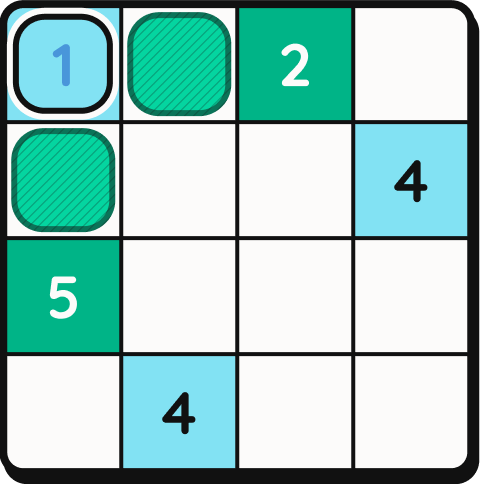
In this example, the 1 is in a Field with 1 cell, so it shouldn’t be any larger. We can outline it in green. Note that we don’t have to make the diagonal cell green. It’s ok if the diagonal cell ends up being blue, because it wouldn’t be connected to the 1.
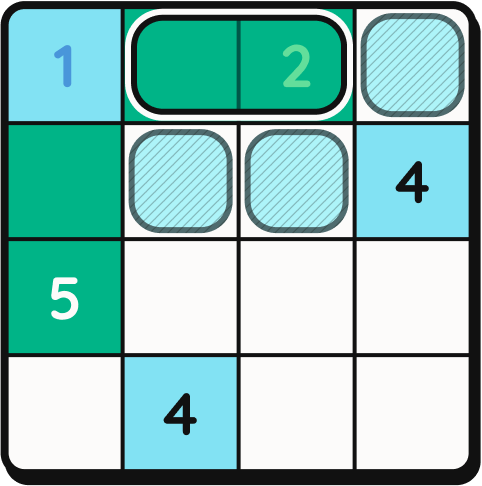
Now the 2 is in a Field with 2 cells, so it’s also complete. We can outline it with blue.
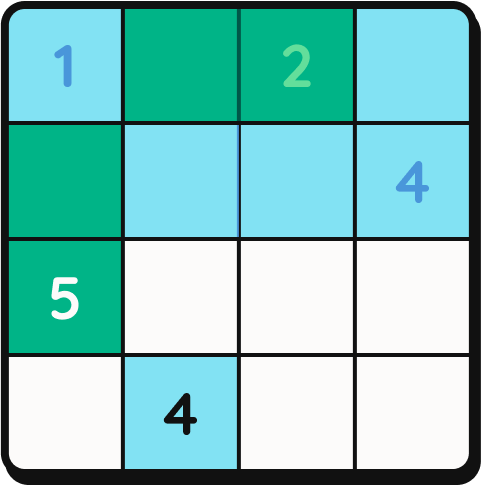
Area Separation
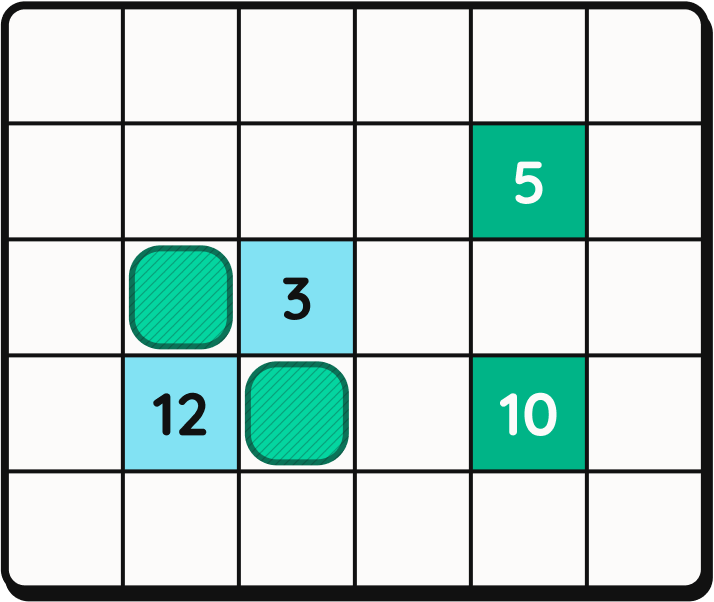
A Field can never have more than one numbered field in it. Because of this, we must separate two numbers of the same color that are almost touching. Let’s look at an example:
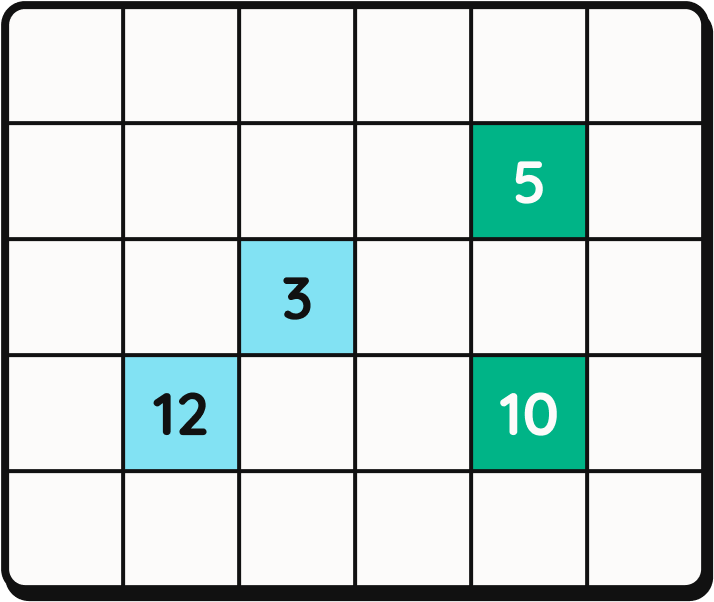
The 3 and 12 are almost touching. This means the two cells that are next to both of them must be green. If either of those cells were blue, then the 3 and 12 would both be part of a single Field, which is not allowed!
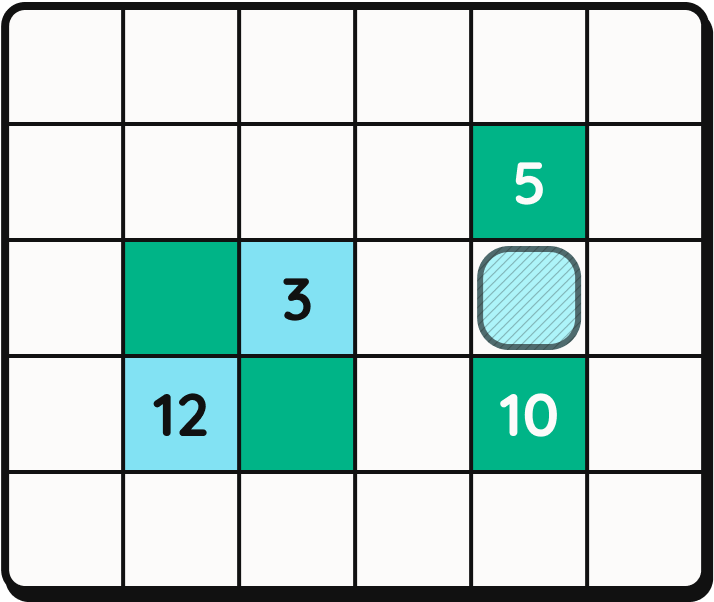
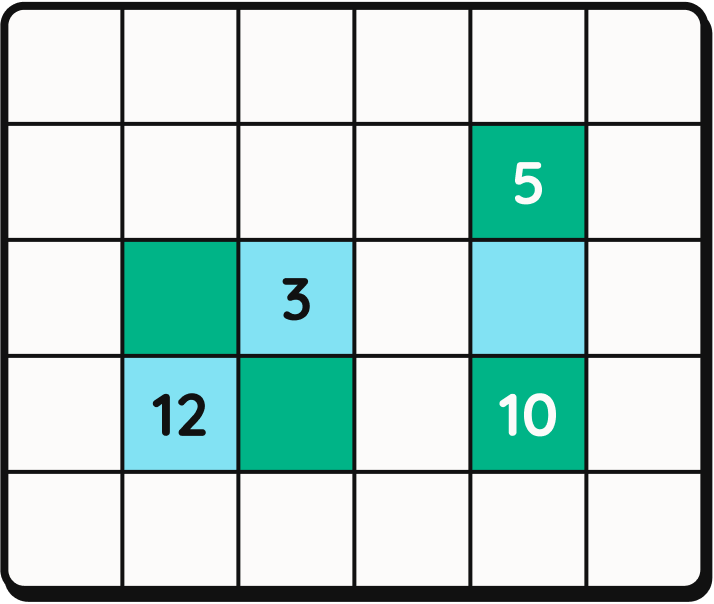
We have a similar situation with the 5 and 10. The cell between them must be blue, or the 5 and 10 would both be part of a single Field.
Area Expansion
When a Field is smaller than its number, it needs to grow until it reaches its target size. Keep an eye out for Fields that only have one possible way to grow.
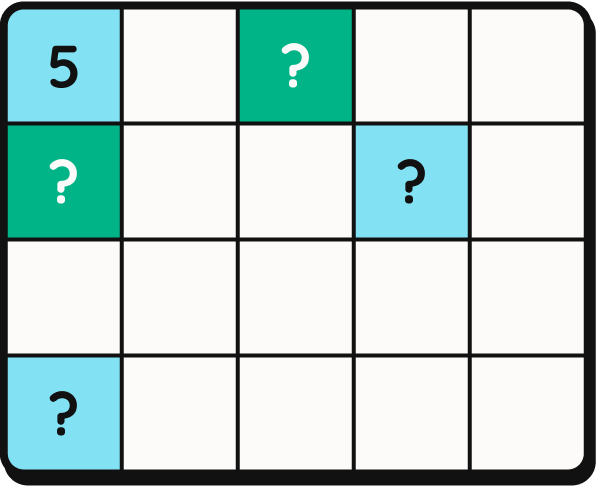
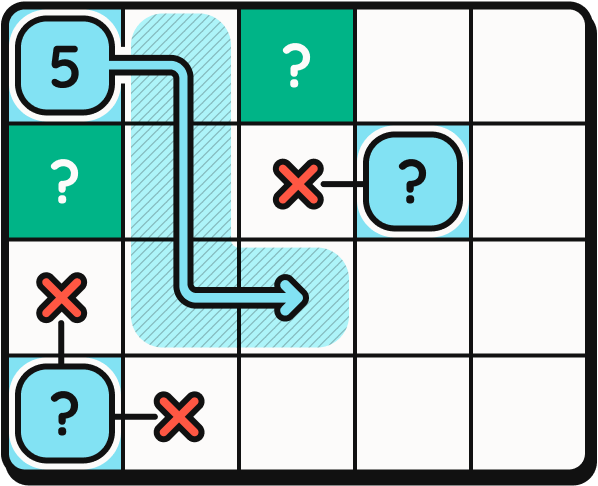
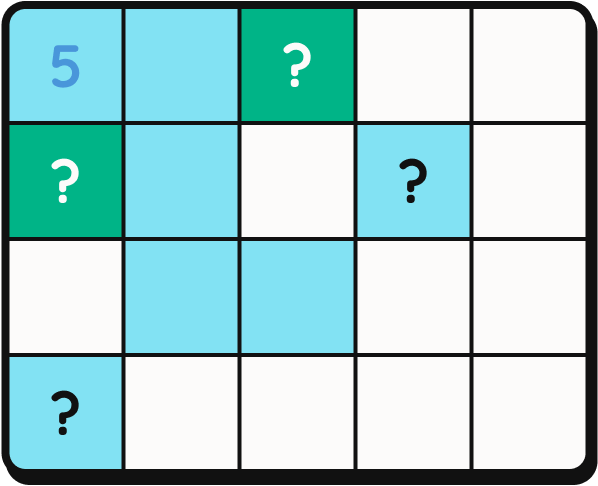
In this example, the 5’s path for growing is restricted by the green Fields nearby. It’s also restricted by the blue Fields nearby, because it can’t touch them or else there would be two numbers in a single Field. Ultimately, the 5 only has one possible path to grow to the correct size.
Orphan Cells
Look for cells or Fields whose color you know, but aren’t connected to a number yet. These are especially good at forcing logic. Orphan Fields will grow until reaching a number, so if they only have one way to expand, they must expand that way.
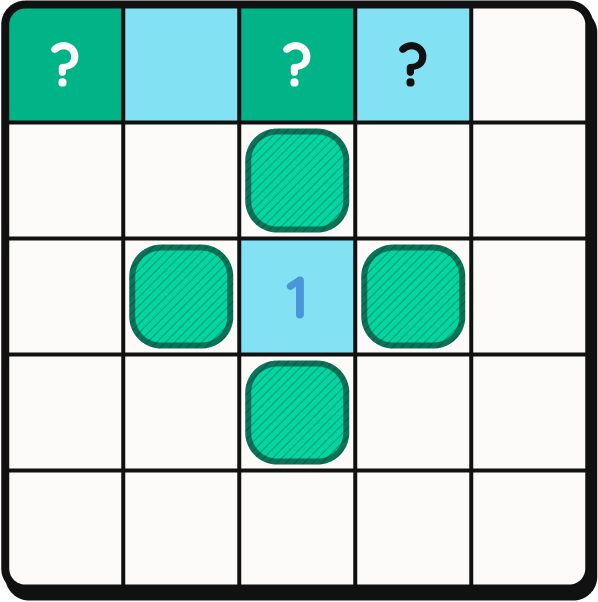
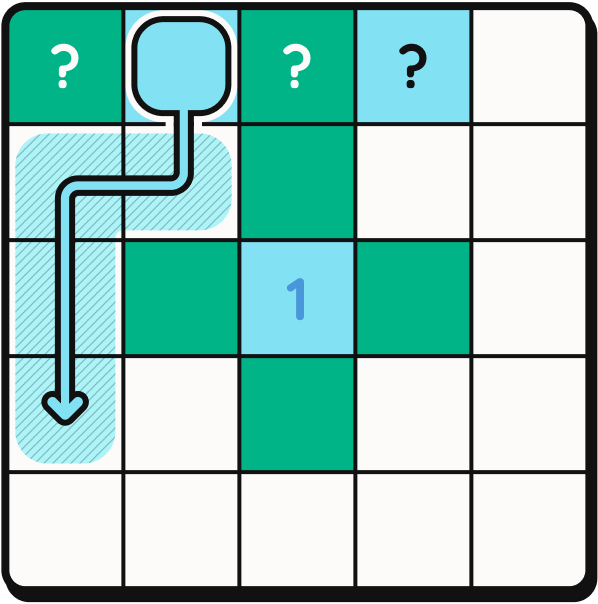
This puzzle starts with placing an orphan blue cell in order to separate the two green [?] Fields. There’s only one path for the orphan cell to grow, before reaching the bottom-left corner.
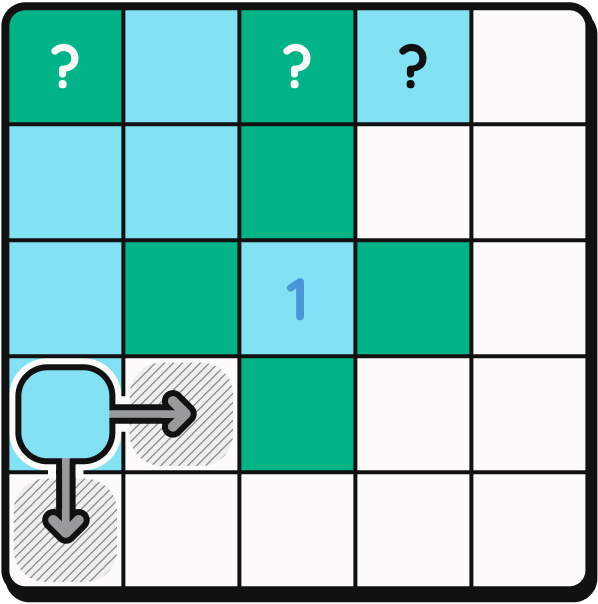
At this point, there are two possible ways for the Field to grow, so we can’t proceed any further without making progress elsewhere.
You’ve now got the core tools you need to start solving Fields puzzles with confidence, and this is just the beginning. As puzzles grow more complex, so does the logic behind them. Next we’ll dive into Intermediate Fields techniques that help you apply even more logic tricks, spot subtler constraints, and gently nudge the puzzle forward when it’s playing hard to get.
.png)
.png)
.png)
.png)
.png)
.png)
.png)
.png)