
.png)
Every Inkwell Stars puzzle looks calm at first. Clean grid. Simple rules. No rush. Then you place a star, cross out an X, and suddenly the puzzle comes to life.
As you solve, familiar patterns start to emerge, and once you recognize them, solving gets faster, smoother, and way more satisfying. Over time, our community, has come up with short hand names for things that appear regulalry in Stars puzzles. You don’t need to memorize them, use this guide as a toolbox you’ll return to whenever a puzzle slows you down.
Let’s get into it.
THE RED MESSAGE OF DEATH
The Red Message of Death appears when you confidently fill in the entire puzzle, expecting the satisfying twinkle of completed stars, only to be met with an error message instead. It’s the game’s way of telling you that something, somewhere, is wrong.
CHUNKS OF NECESSITY
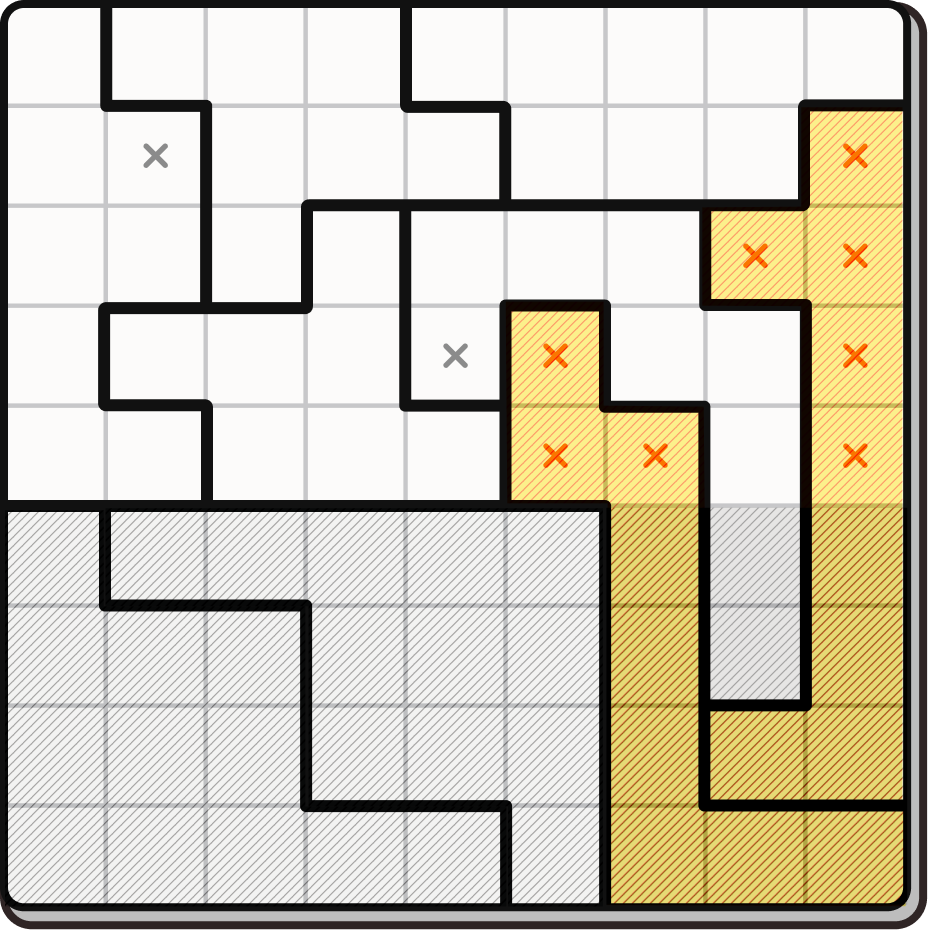
When a section of the puzzle can only place its required stars within a limited set of rows or columns, those rows or columns form a chunk. That chunk tells you exactly where stars must go (and where they cannot go).
If both the rows and the regions within a section require a fixed number of stars, the overlap of those requirements forces certain cells to be stars. All other cells in those rows must be marked with Xs by necessity.
WHOLE SIDES
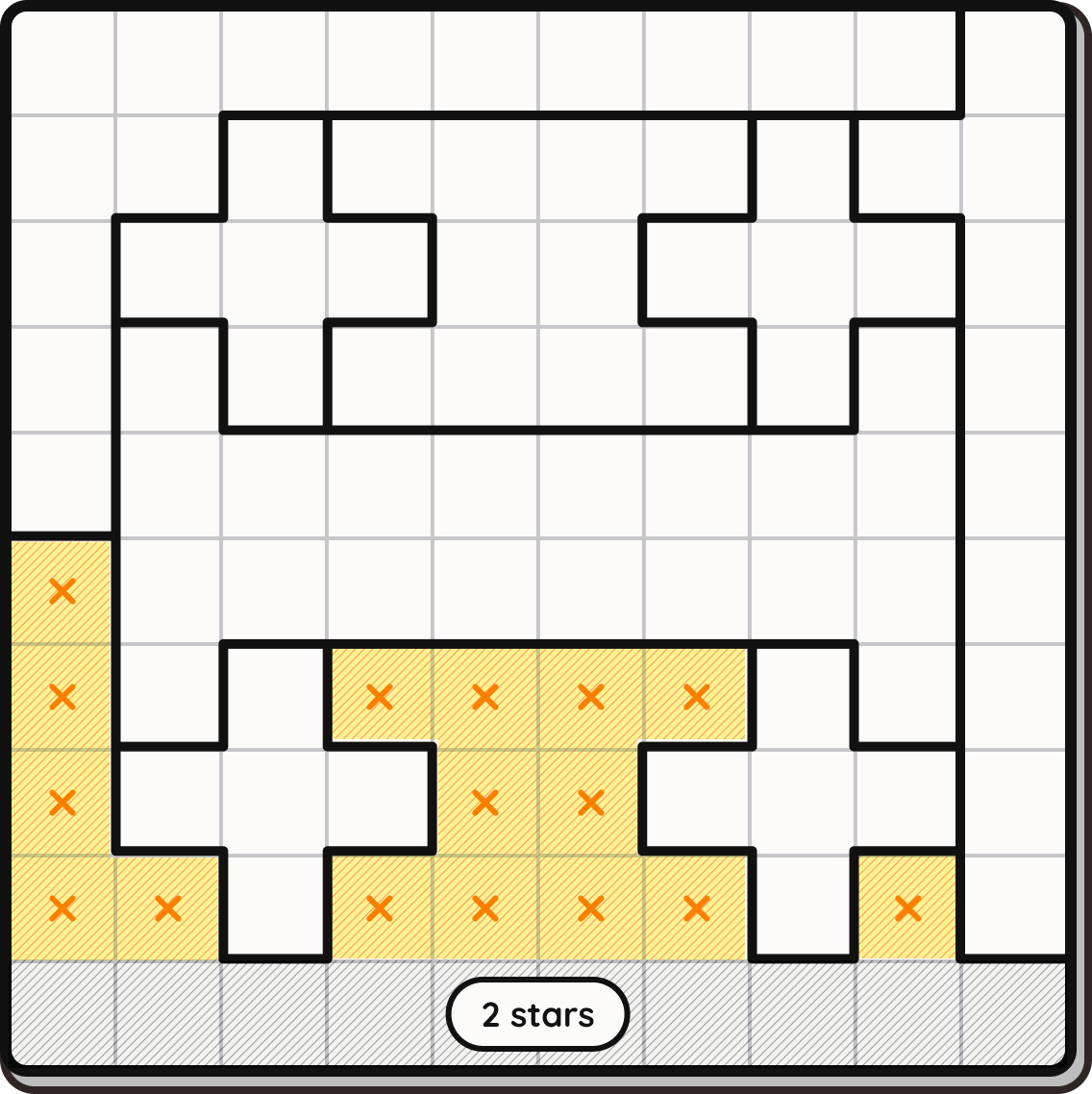
If a region includes an entire edge of the puzzle, the two stars for that row or column must be placed in the edge cells. Any cells in that region that are not on the edge can be safely marked with Xs.
TETRIS
A region shaped like a Z that contains 4 or 6 cells. These must have an X in the outside corners. If you place a star in any corner, too many cells are compromised leaving no room for a second star.
TARGETED TRIAL AND ERROR
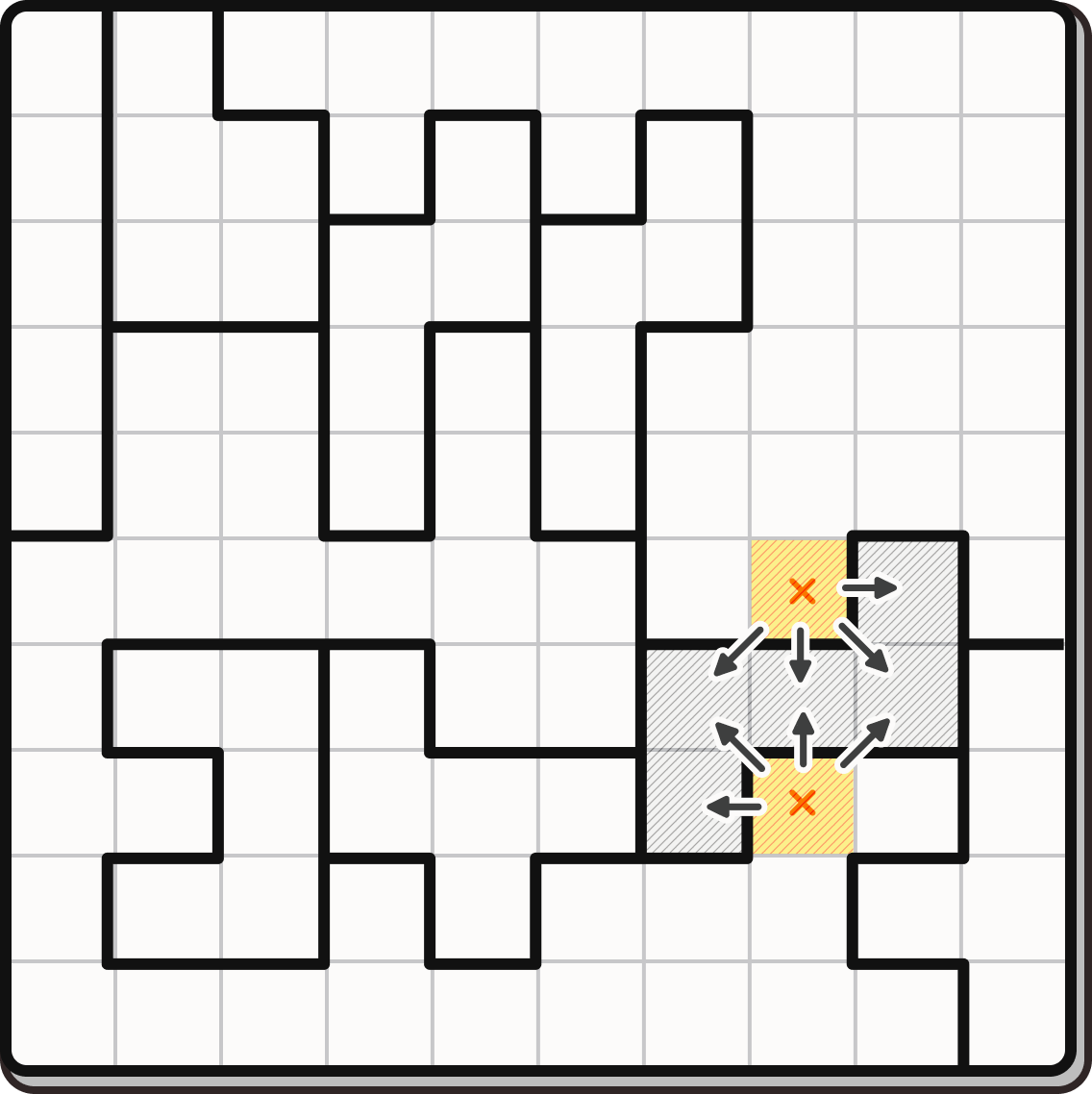
Targeted trial and error means choosing a specific cell where knowing whether it contains a star would help you make progress. You temporarily place a star there and follow the consequences. Most of the time this leads to a contradiction, proving that the cell cannot contain a star, (used in conjunction with the twinkling star).
THE RULE OF 2
If a star must go into a row (or column) with only two available cells, the cells directly beside those two can be marked with Xs.
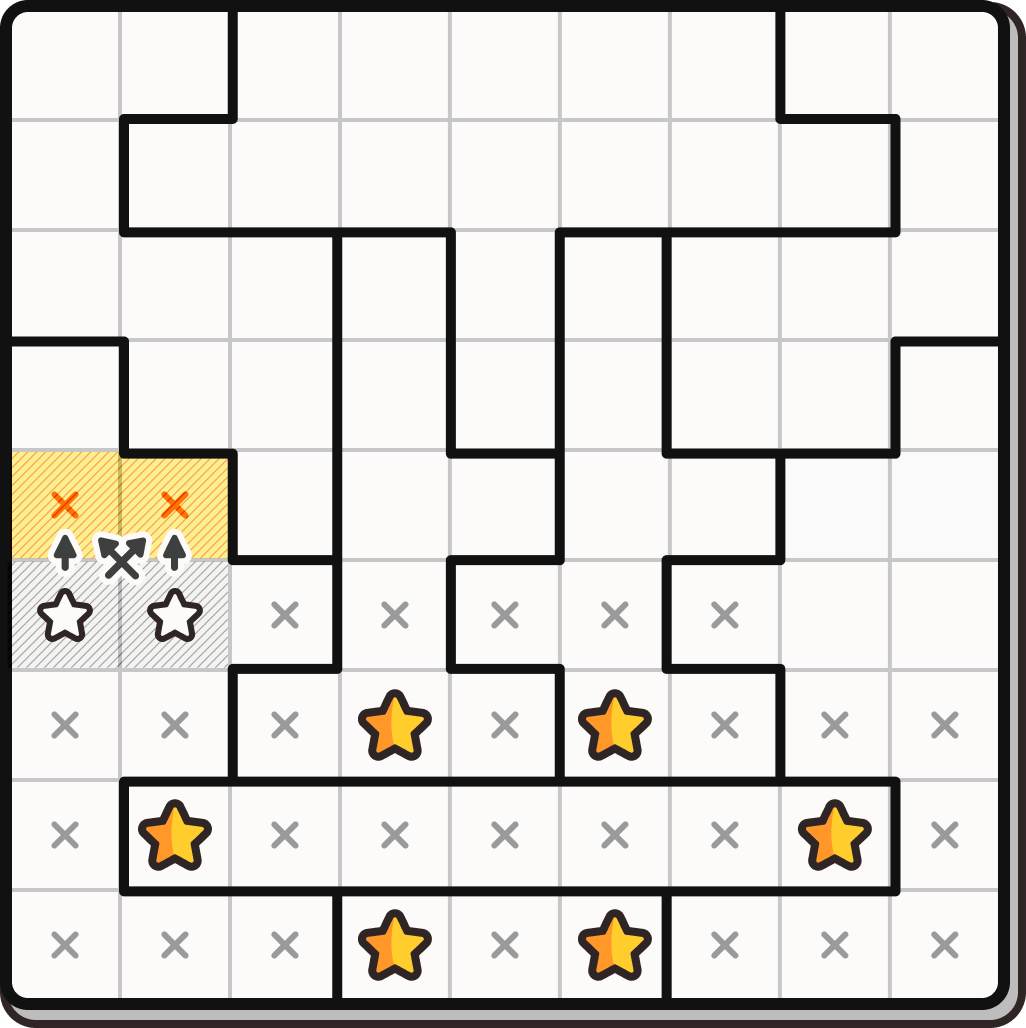
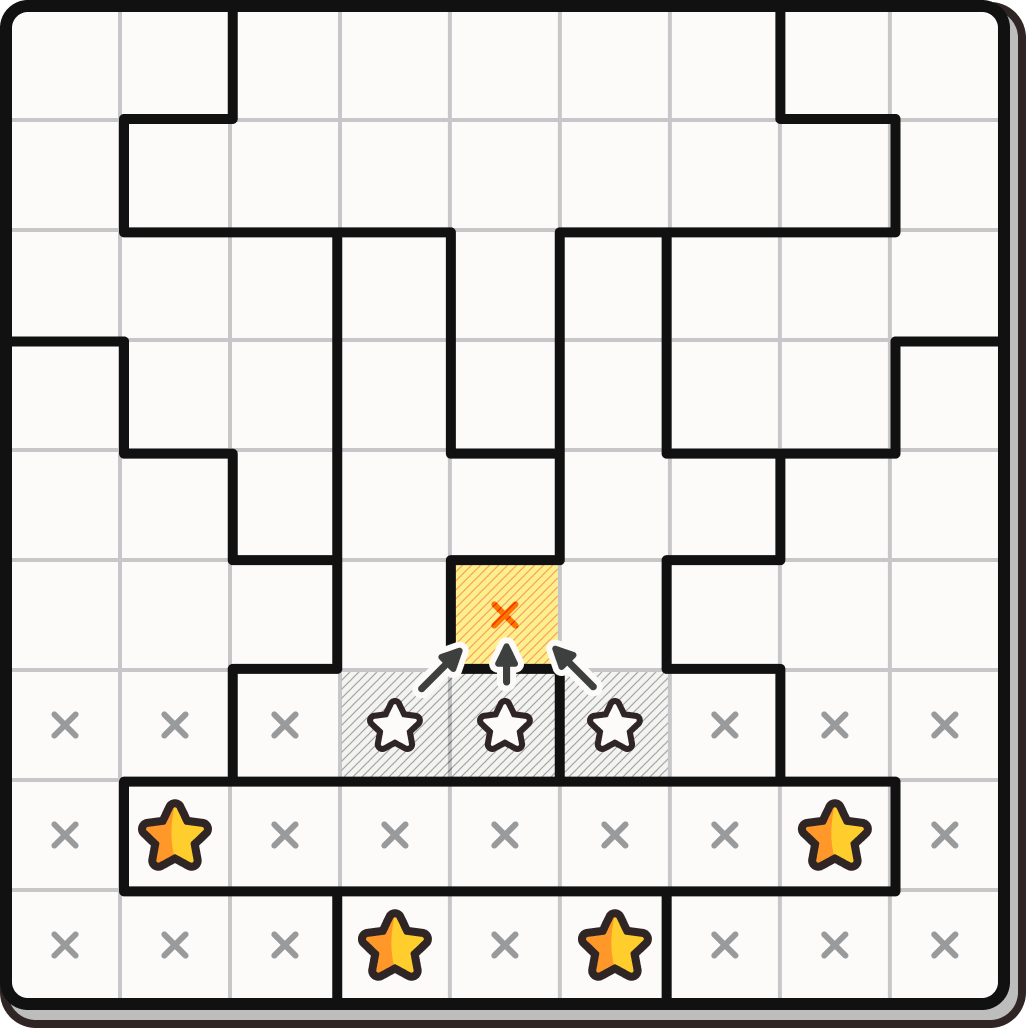
THE RULE OF 3
If a star must go into a row of three available cells, the center cell directly above and below that row can be marked with Xs.
(The same logic works vertically.)
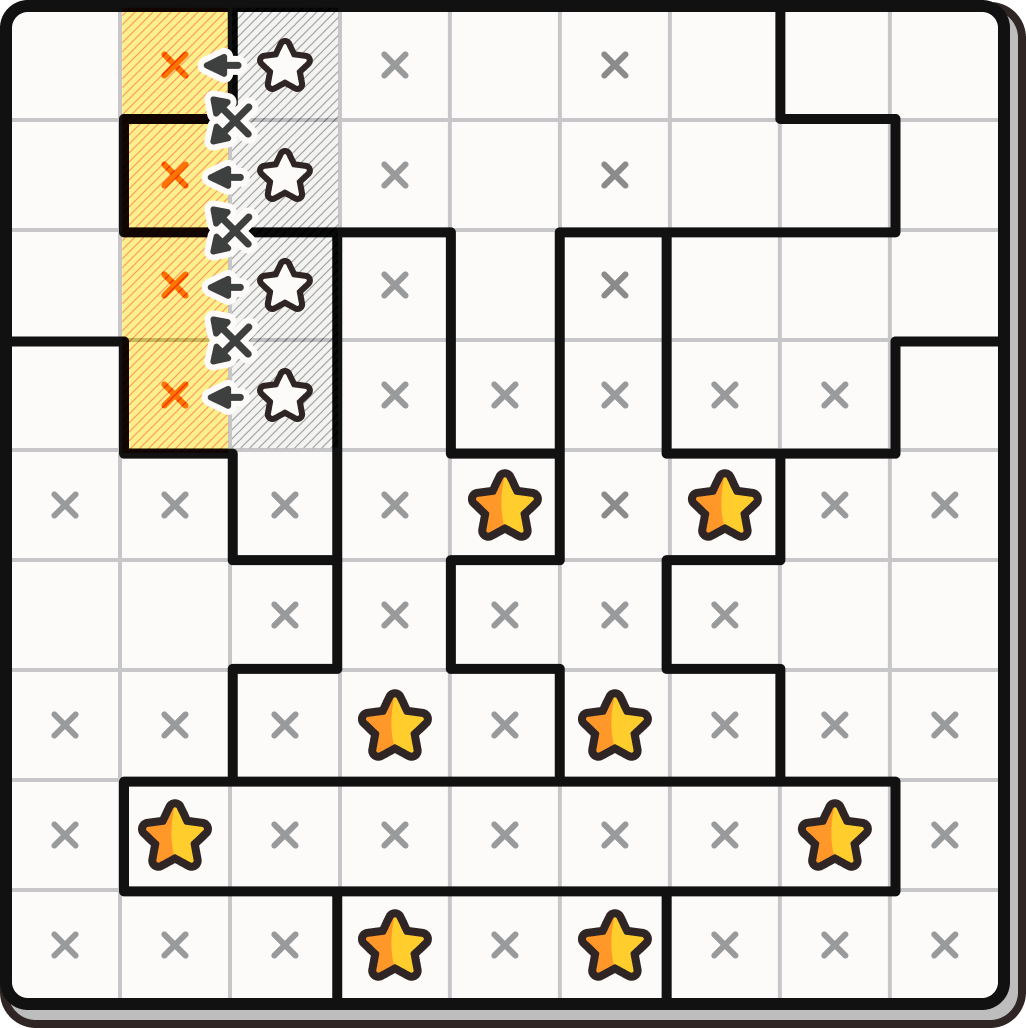
THE RULE OF 4
When there are only four adjacent cells available for a star in a row or column, the eight surrounding cells directly above and below, or to the left and right, must be marked with Xs.
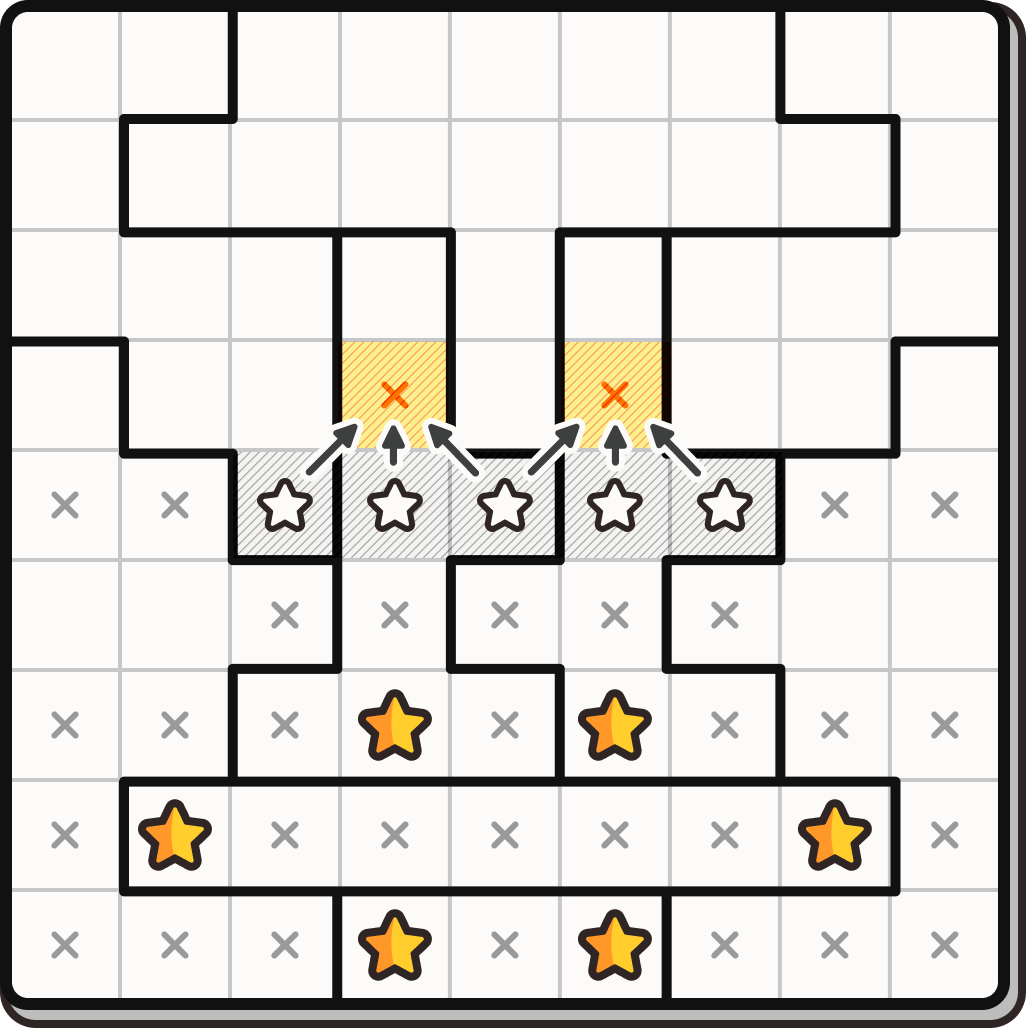
THE RULE OF 5
If two stars must be placed in a sequence of five empty cells, Xs can be placed outside the second and fourth cells, following the same pattern used in the Rule of 3.
TWINKLING STARS
Toggle a star on and off a few times. If you later need to undo back to a certain move, the twinkling star makes it easier to spot.
PARITY & NEAR PARITY
Parity refers to similarities in solve times between players on the same puzzle. Perfect parity means finishing with exactly the same time as another player.


The more you play Inkwell Stars, the more these patterns start to show up naturally.
Some days you’ll glide through with perfect parity. Other days you’ll meet the Red Message of Death and start over with a fresh perspective.
So keep spotting chunks, testing stars, and letting the puzzle unfold. The puzzle is always telling you something, you just have to learn how to listen.
But the best part? You’re not doing it alone.
Every day, the Inkwell community is out there spotting new patterns, debating risky test stars, and sharing those “wait… this has to go here” breakthroughs.
So if you’ve found a trick, a pattern, or even just a satisfying solve, share it. Someone else is right on the edge Someone else is right on the verge of seeing it click too!
.png)
.png)
.png)
.png)
.png)
.png)
.png)