
.png)
Now you’re familiar with the basics it’s time to look a little deeper. Intermediate techniques build on beginner logic but ask you to track multiple Fields at once, anticipate growth, and use restrictions more deliberately. These are the moves that help you get unstuck.
Area Overgrowth
Avoid making Fields too large! This means looking out for, and avoiding, situations where a Field contains too many cells.
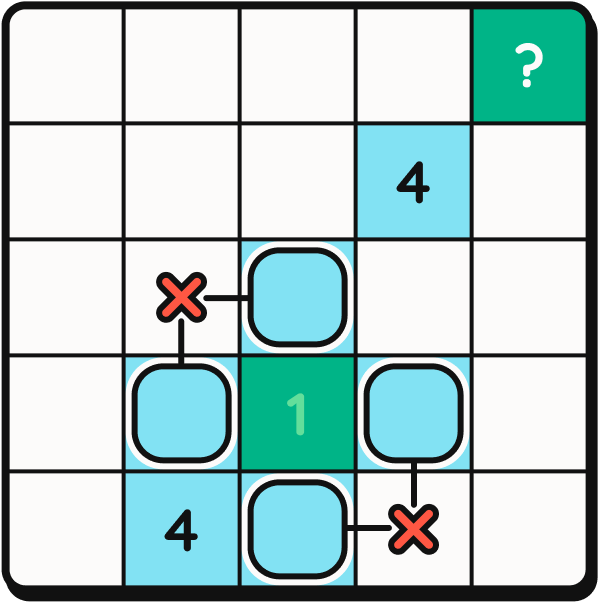
The 4 already has three out of four total blue cells. It has to be separated from the blank blue cells nearby. Otherwise, it would contain too many cells!
Bottlenecks
Bottleneck logic is probably the single most useful strategy in Fields! When a Field is in an area that’s too small for it to fit, and the area is blocked off everywhere except for a “bottleneck”, you can apply this logic. A “bottleneck” is a path that the Field is forced to follow in order to exit the area.
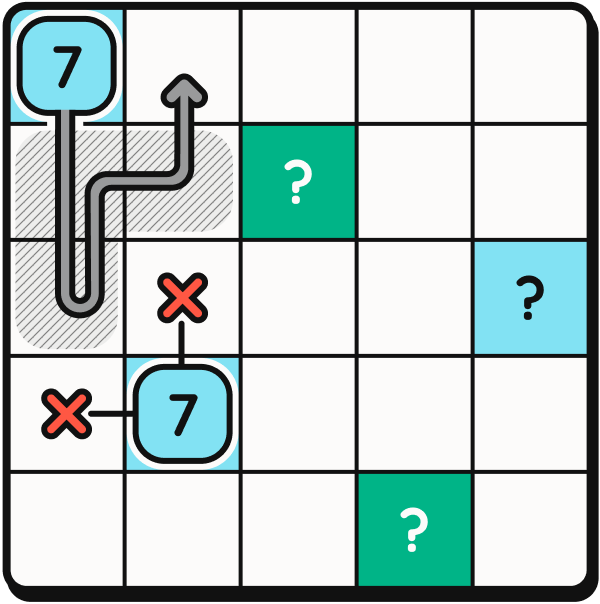
In this puzzle, the 7 in the top-left corner is “bottlenecked,” because when it grows down it’s trapped in an area that is smaller than 7 cells and has to grow across the top row in order to escape.
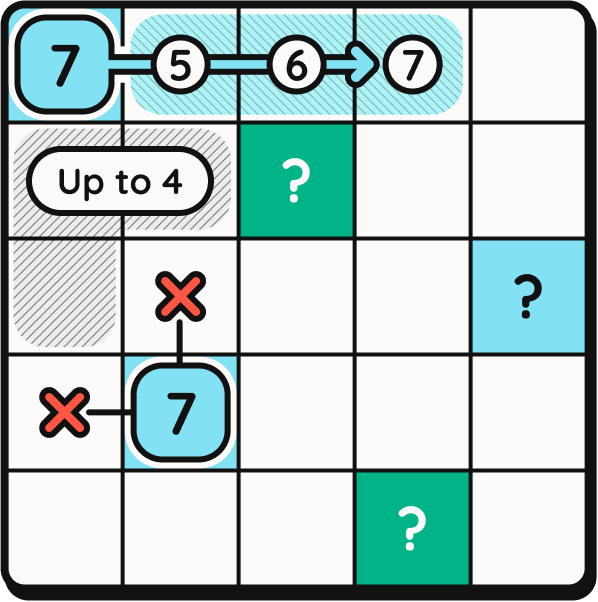
The area below the 7 has a four cells before the bottleneck. At this point it’s not clear how many of those four cells the 7 will occupy, but even if it occupies all of them, it will need to expand further to reach a size of 7. We can determine the 7 is going to occupy at least 3 cells across the top.
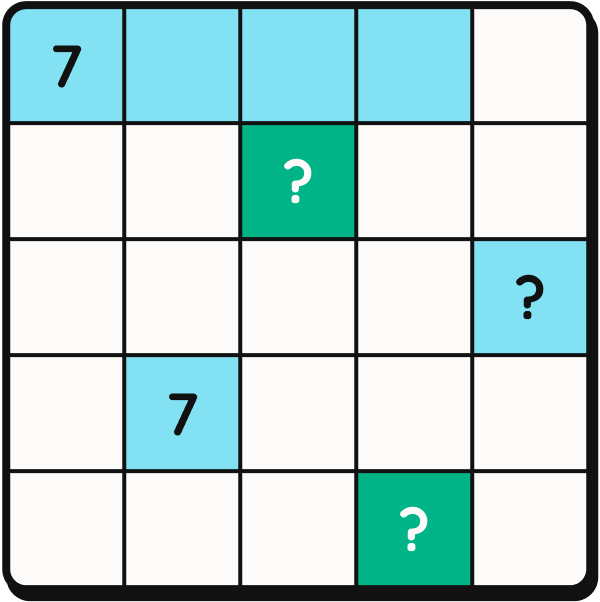
The 7 might end up expanding further than this, but at least we know these are the cells that it has to occupy. Even if it occupied the entire area it was originally bottlenecked in, it would still need to expand this far in order to have enough space.
Out Of Range Cell
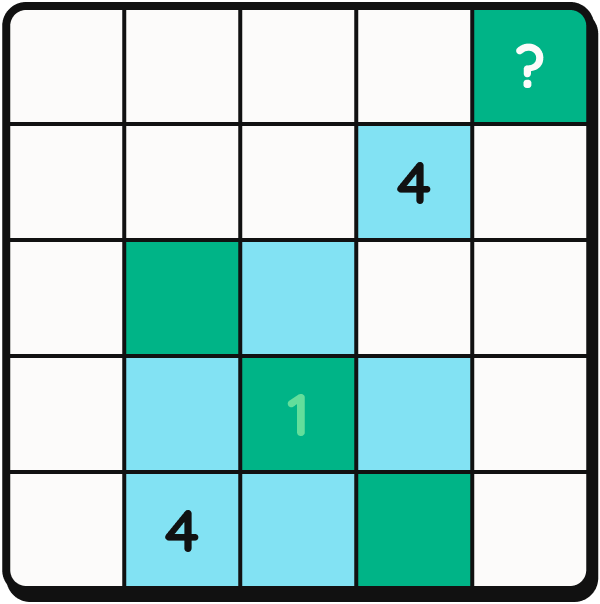
When a cell can only be reached by Fields of one color, mark it as the same color. This usually happens in corners and on edges.
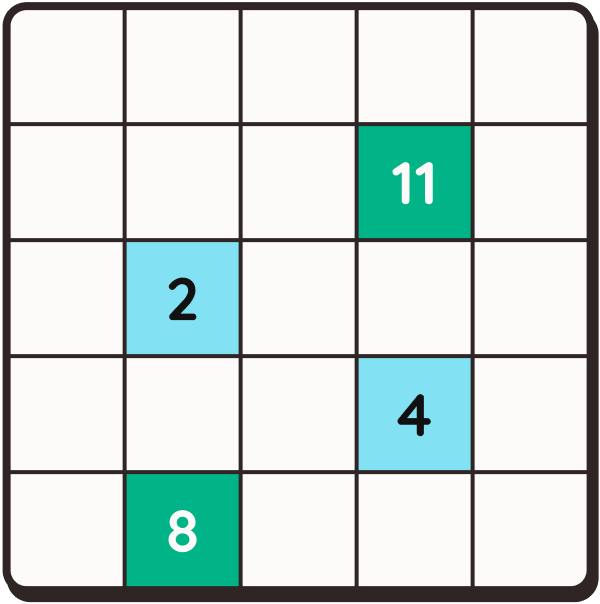
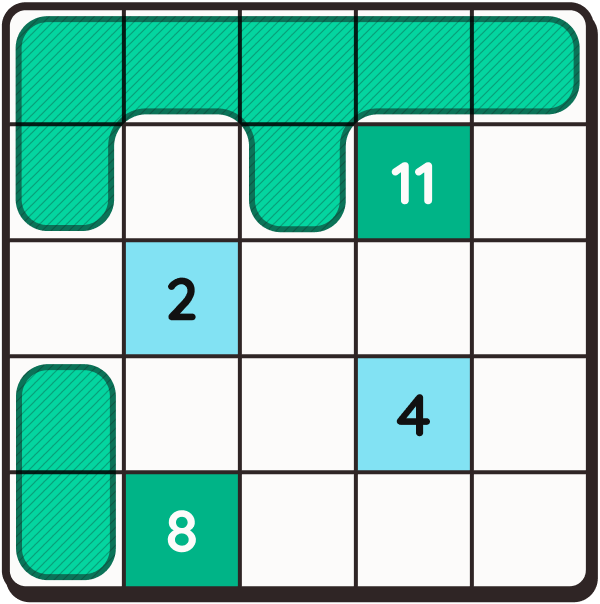
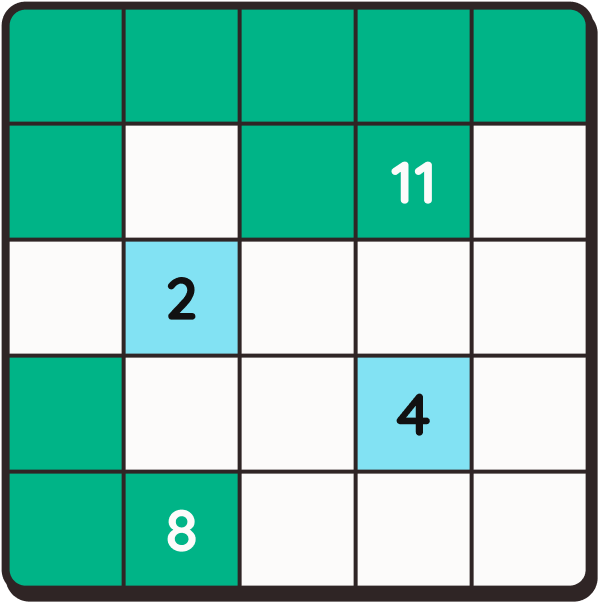
In this case, the indicated cells must be green because they cannot be reached by any blue Field.
Pathing
When you know two regions belong to the same Field (in this case, we have an “Out Of Range Cell” in the bottom-right corner that can only be reached by the 10. Check what options there are for the path between then. There might be forced paths and bottlenecks.
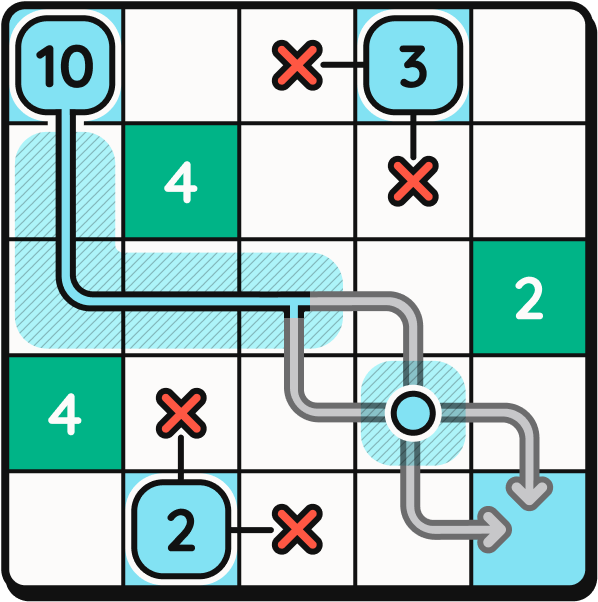
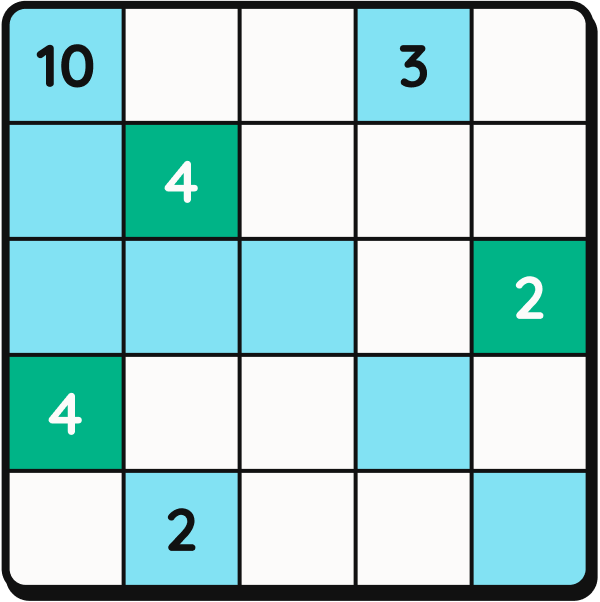
In this case, there is an “Out Of Range” orphan cell in the bottom-right corner that could only possibly connect to the 10 in the top-left corner. There isn’t enough room for it to reach the 10 via the top edge, so it has to reach via the left edge. There is also a bottleneck near the bottom-right corner that the path must pass through, no matter what.z
Intermediate techniques are where your solving really starts to feel powerful. You’re no longer just reacting for what’s obvious, you’re anticipating growth, spotting pressure points, and using space as a strategic tool. Area control, bottlenecks, out-of-range cells, and pathing all work together to narrow possibilities and reveal what must be true.
Mastering these techniques will dramatically reduce the number of times you feel stuck, and when you do get stuck, you’ll know exactly what to look for next.
Ready to take it even further? In the next instalment, we’ll explore Advanced Techniques, topology, running trials, and high-level strategies that turn tricky puzzles into satisfying solves.
Let’s level up.
.png)
.png)
.png)
.png)
.png)
.png)
.png)
.png)